
The Military School That Helped Build Venice, Florida — And Why It Still Matters Today
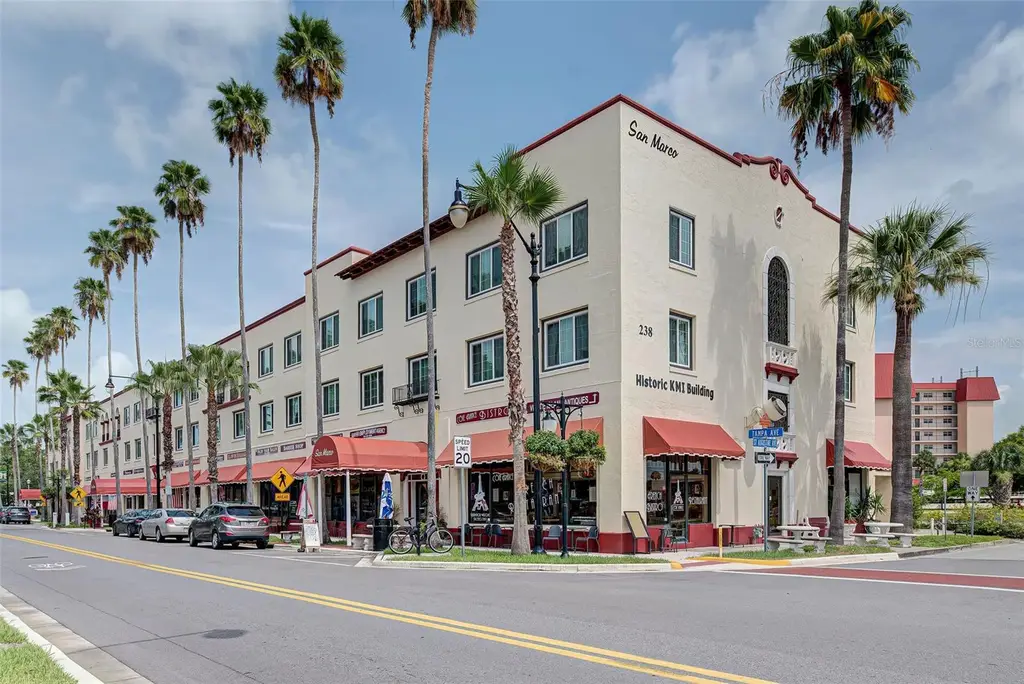
What was the Kentucky Military Institute's connection to Venice, Florida? From 1933 to 1970, Kentucky Military Institute operated a winter campus in Venice, Florida, bringing hundreds of cadets, faculty, and staff to the Gulf Coast each year and playing a pivotal role in shaping the character — and economy — of the city we know today.
There's a building on the Venice Island waterfront that most people walk past without knowing its full story. The San Marco building, with its graceful Mediterranean Revival architecture and busy first-floor shops, once served as the winter home of one of America's oldest and most distinguished military academies. If you've ever wondered why Venice feels different from other Gulf Coast towns — more layered, more storied — part of the answer lives in those walls.
This is the history of Kentucky Military Institute and the 37 winters it spent in Venice. It's also the story of a town that welcomed strangers, built lasting relationships, and became something richer for it.
A School with Deep American Roots
The Kentucky Military Institute — KMI to those who knew it — was founded in 1845 and officially chartered by the Commonwealth of Kentucky in 1847. Its founder, Colonel Robert T. Allen, was a West Point graduate, military veteran, professor, and inventor. From the beginning, KMI's mission was to develop character through discipline, training, and community. Over the next century, KMI evolved from a militia training ground into one of the country's premier college preparatory schools, with a campus in Linden, Kentucky (on the outskirts of Louisville) and a long-standing affiliation with the U.S. Army's Reserve Officer Training Corps. Its motto — "Character makes the man" — wasn't just institutional copy. Alumni from the 1940s through its closure would tell you those words meant something real.
Why Venice?
By the late 1920s, KMI had weathered fires, financial hardship, and a change in ownership. Three professors from Greenbrier Military School purchased the institution around 1925 and brought in Colonel Richmond as commanding officer. What they needed was a winter campus — a way to keep cadets healthy and the school operational through cold Kentucky winters. A former student and commandant living in Sarasota pointed them toward Venice. In July 1932, Colonel Richmond visited and found exactly what he was looking for: the San Marco building offered thirteen first-floor classrooms and dormitory space upstairs, while the nearby Hotel Venice could house younger students and counselors. Venice's Mediterranean-inspired layout, Gulf breezes, and available facilities made it an ideal fit. KMI signed a rental agreement with the Brotherhood of Locomotive Engineers (BLE) — the original developers of Venice — and began preparing for their first winter season.
January 5, 1933: The Cadets Arrive
The first trainload pulled into Venice on January 5, 1933. On board: 125 cadets, 25 faculty members, and 25 staff — plus footlockers loaded into a brake car at the rear. The 40-hour ride from Louisville offered no sleeping cars. The boys played cards, endured the hours, and arrived to something they didn't expect. Nearly 2,000 people had gathered to welcome them. Venice in 1933 was an economically depressed town. The BLE's ambitious planned city had stalled during the Depression, and many storefronts sat empty. KMI's arrival meant revenue, energy, and life. Locals lined the streets, offered rides, and opened their homes. It was, by all accounts, a genuine welcome — not a transaction. That warmth set the tone for nearly four decades to come.
Life on the Winter Campus
The San Marco Building The San Marco building became the academic and administrative heart of KMI's Venice operations. First-floor classrooms ran the full length of the arcade. Upstairs dormitories housed older cadets. Near the building's front entrance, two iron-gated offices — Colonel Richmond's and the commandant's — served as the institutional nerve center that cadets generally tried to avoid. A small infirmary with two beds operated on the first floor, staffed by a no-nonsense nurse the boys called "Nurse Fowler" (her real name was Nurse Langan). If you were sick enough to end up in those beds, you were in rough shape. Most cadets preferred to recover on their own.
Hotel Venice and the Dining Hall
Younger students and faculty lived at the Hotel Venice on Tampa Avenue. The entire student body formed up on Tampa Avenue each morning for inspection — shoes shined, buttons polished — before marching into the hotel's dining hall together. Meals were formal affairs, complete with ritualized table customs that alumni recalled decades later with a mix of nostalgia and laughter.
Parades at Centennial Park
Every other Sunday afternoon, KMI held full-dress parades at what is now Centennial Park — the long, open parade ground along the waterfront. Crowds of 1,500 to 2,000 people gathered from as far south as Fort Myers to watch. Cadets carried government-issued M1 rifles and ceremonial sabers, marching in precise formations under the Florida sun. The cadets didn't always love it. The crowds always did.
Venice Theater :The Old Armory
The building now home to the Venice Theatre served as KMI's gymnasium and military offices. The rifle range was housed there as well. It's a remarkable through-line — a building that once trained young men in discipline and precision now trains performers in their craft.
What KMI Gave Venice — and What Venice Gave KMI
The relationship between KMI and Venice wasn't purely transactional. Alumni who gathered for reunions decades after the school's closure described the local community with genuine affection. Venice residents picked cadets up from the train station, invited them into their homes for meals, and — more than a few — played matchmaker between their daughters and the well-mannered young men in uniform. Dick Meadows Drugstore, located in the old El Paso Hotel, was a favorite cadet haunt. Milkshakes. A friendly face. A few minutes off-campus. Small things that stayed with people for a lifetime. When asked decades later what KMI gave them, alumni consistently named two things: character and camaraderie. The kind of friendships formed at KMI — described by one alumnus as the military "I've got your six" bond — were the kind that lasted a lifetime. The kind you don't find in many places.
The End of an Era
KMI's last winter season in Venice was 1970. The school closed entirely the following year, a casualty of the anti-Vietnam War sentiment that swept the country and drove enrollments at military schools to historic lows. The parades at Centennial Park ended. The trainloads of cadets stopped coming. A 37-year tradition quietly concluded. Venice had recovered economically by then and didn't need KMI the way it once had. But locals mourned the loss of the seasonal energy, the friendships, the rhythms that had become part of the city's identity.
The Legacy Today
KMI alumni have funded historical displays throughout the San Marco building's first floor. If you've never taken the time to look — really look — at the photographs, artifacts, and institutional history on display there, it's worth an afternoon. The building itself is the exhibit. Today, the San Marco building houses a vibrant mix of first-floor businesses: barbers, a chiropractor, real estate services, a French restaurant, and one of the better bars on Venice Island. The architecture alone is worth the visit — but the history gives it weight. Venice Island's character didn't arrive by accident. It was built, season by season, by the people who chose it. KMI was part of that story for nearly four decades, and its fingerprints are still visible if you know where to look. Interested in what it's like to own a piece of Venice Island's story? Book a consult with Bethany Behrmann, Real Estate Advisor with Behrmann Group at Engel & Völkers, serving Venice Island and Sarasota. She'd love to show you around.
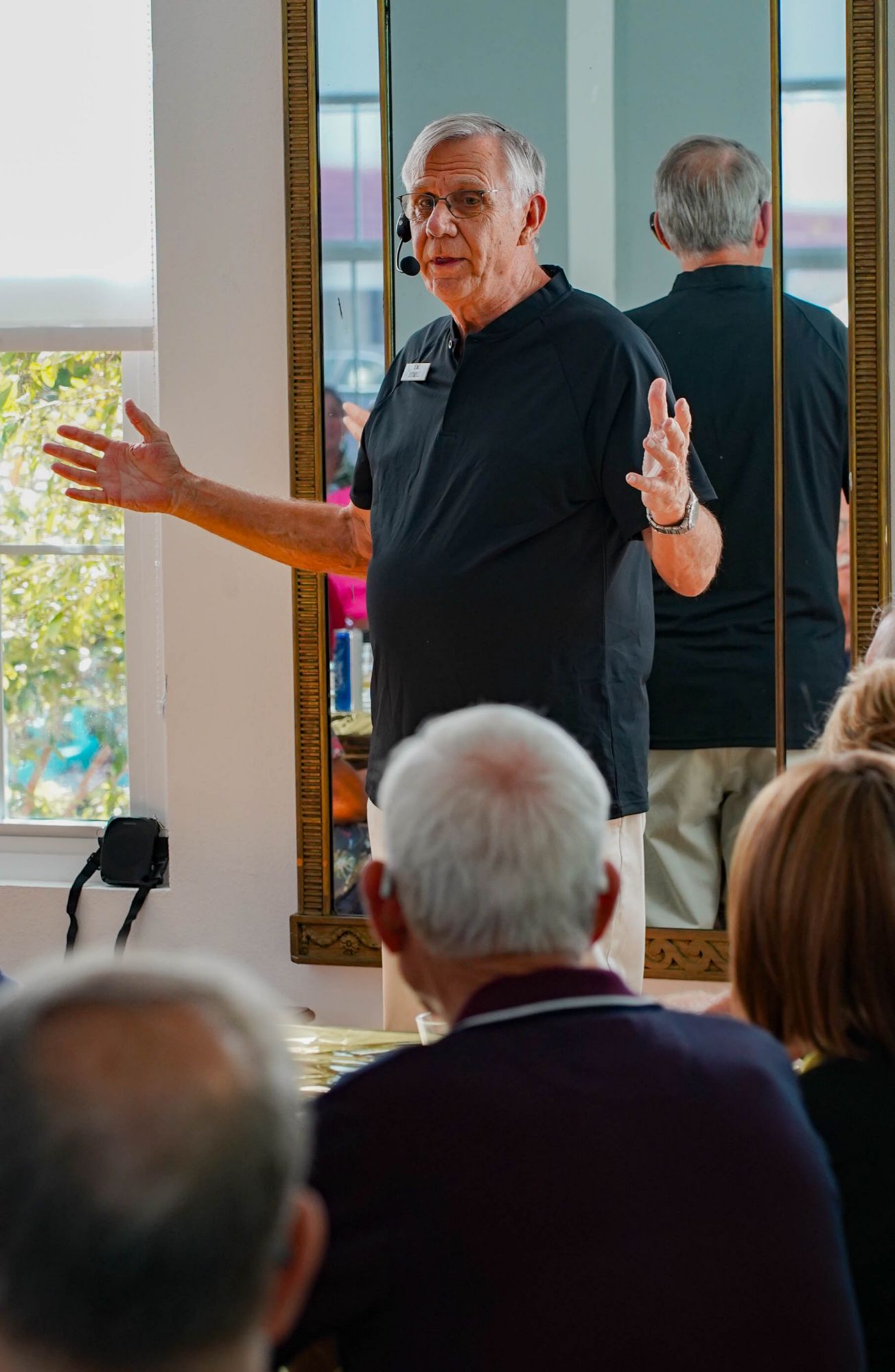 Larry Humes, Speaker, Author and KMI Graduate
Categories
Recent Posts

Why More People Are Falling for the Balearic Islands as a Place to Call Home

Why Venice, Florida Is the New Hotspot for Retirees and Relocators

10 Questions You Should Ask When Looking at Homes

Selling Your Home in Today’s Real Estate Market: What Buyers Want Now

Avoid the Common Mistakes That Delay Big Money—Your Last-Minute Checklist for a Faster Refund

5 Simple Ways to Prepare Your Property for Spring
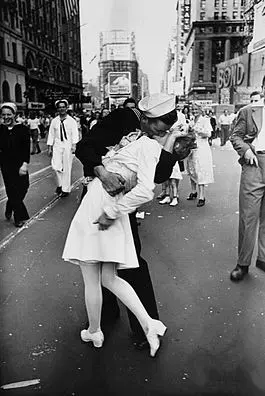
Unconditional Surrender- A Sarasota Icon

THE HANDMADE EDITION – The new GG edition is here!

Why Wellness Design Is Defining 2026 Homes