
Why Venice, Florida is the Shark Tooth Capital of the World
Why Venice, Florida Is the Shark Tooth Capital of the World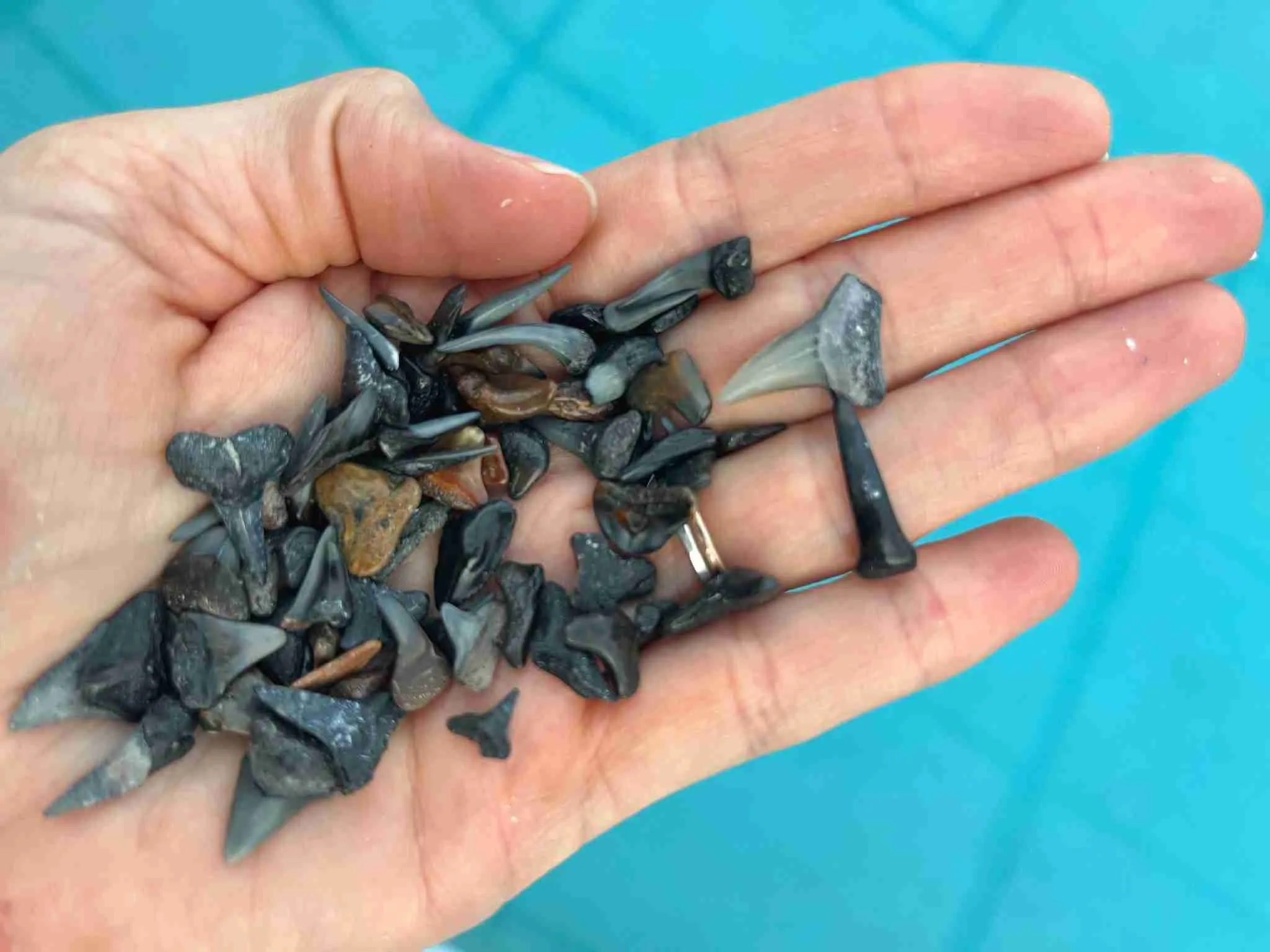
I go shark tooth hunting whenever I can, and I find it completely, genuinely relaxing.
There's something about scanning the wet sand at the waterline that quiets everything else down. No phone calls, no deadlines — just you, the Gulf, and the very reasonable hope that today is the day you find something extraordinary. It's meditative in a way that's hard to explain until you've experienced it.
Then again, I've always loved a good hunt. Whether it's retracing my steps for a missing piece of jewelry, scoring an unexpected find at a thrift store, or spotting a diamond-in-the-rough home just waiting for the right renovation — I'm the kind of person who finds deep satisfaction in the search itself. Shark tooth hunting fits that part of my personality perfectly.
I'll also be completely transparent: I have never found a tooth larger than half an inch. Not once. But here's the thing — on a good morning, I can easily find hundreds of smaller teeth, wading in no deeper than my knees. Hundreds. That's not an exaggeration. The supply really is that astonishing. And every single one of those tiny teeth is millions of years old. I never lose sight of that.
So why does Venice have so many shark teeth in the first place?
The answer is one of the most fascinating geological stories on the Gulf Coast — and it goes back about 20 million years. Why does Venice, Florida have so many shark teeth on its beaches? Venice, Florida sits directly above a prehistoric fossil layer formed 5–23 million years ago, when a warm shallow sea covered the state — making its beaches one of the richest shark tooth hunting grounds on Earth.
Every time you walk the shoreline along Venice Island, you're doing something remarkable without even realizing it: you're strolling across the floor of an ancient ocean. The black sand glittering between your toes isn't just debris — it's fossilized history, and some of it is 20 million years old.
Venice didn't earn the title "Shark Tooth Capital of the World" through marketing. It earned it through geology. The combination of prehistoric sea life, a specific rock formation, a gently sloping ocean floor, and relentless coastal erosion has created conditions that simply don't exist anywhere else on the planet — at least not this accessibly.
The Ancient Sea Beneath Your Feet
During the Miocene Epoch — roughly 5 to 23 million years ago — most of what is now Florida was submerged beneath a warm, shallow sea. It wasn't a cold, dark ocean. Think clear, tropical water teeming with marine life: rays, dugongs, whales, barracuda, and an astonishing variety of sharks.
The sharks that swam across prehistoric Florida included species you'd recognize today — bull sharks, tiger sharks, mako sharks, great whites, and sand sharks — along with species that no longer exist, most famously the megalodon. Megalodons could grow up to 60 feet long, and their teeth could reach the size of your hand.
Here's what makes shark teeth so abundant: a single shark can shed up to 30,000 teeth over its lifetime. Multiply that by dozens of species. Multiply that by millions of years. Multiply that by an entire sea's worth of sharks — and you start to understand why the fossil layer beneath Venice is essentially a buried archive of prehistoric ocean life.
Unlike shark skeletons, which are made of cartilage and disintegrate quickly, teeth are dense and mineralized. They fossilize exceptionally well. The black color you see on beach-found teeth comes from minerals absorbed during the fossilization process — iron sulfide, most commonly — which is why fresh shark teeth are white and fossil teeth are dark.
The Peace River Formation:
Venice's Geological Secret The geological key to Venice's fossil wealth is a rock layer called the Peace River Formation — a phosphate-rich deposit laid down during the Miocene period that contains an extraordinary concentration of marine fossils. This formation runs throughout much of central and southwestern Florida, but it's particularly close to the surface along the Venice coast.
The fossil layer here runs 18 to 35 feet deep beneath the shoreline. Every storm, every tidal shift, and every wave cycle slowly erodes that layer and pushes fossilized material into the shallows — and eventually onto the beach. The supply is effectively endless on a human timescale.
What makes Venice's specific stretch of coastline so productive is the geometry of the ocean floor. Between Englewood to the south and Nokomis to the north, the seafloor drops away gradually rather than steeply. That gentle slope slows erosion just enough that teeth wash ashore intact rather than being pulverized by wave action. It's a nearly perfect natural conveyor belt from the fossil layer to your hands.
"The Boneyard":
Where the Big Finds Are If you're hunting for the ultimate prize — a megalodon tooth — you'll want to go deeper. Experienced divers know about a submerged historic riverbed running parallel to the Venice shoreline, approximately a mile and a quarter offshore at around 27 feet of depth. Locals call it "the boneyard."
You know you're in the right spot when the seafloor shifts to dark gravel — that's fossilized material. The boneyard is where the largest and oldest specimens are found, because the riverbed has concentrated fossil debris over centuries of underwater erosion. Dive charters out of Venice regularly run trips to this site, and it's not unusual for divers to surface with megalodon teeth measuring three or four inches.
For those who prefer to stay dry, the beaches between Caspersen Beach and Venice Beach are the most productive for shoreline hunting — particularly after storms, which churn up fresh material from deeper water. Early morning, after a night of wave activity, is the best time to look.
What You Might Find
The most common finds on Venice beaches are sleek, angular teeth from mako sharks, bull sharks, and tiger sharks — dark, sharp, and immediately recognizable once you know what you're looking for. They're small enough to miss if you're not paying attention, which is why locals walk with their eyes scanning just below the waterline in the wet sand.
Beyond shark teeth, Venice beaches yield a genuine prehistoric menagerie: Stingray mouth plates — flat, pebbled fragments that look almost like cobblestone Barracuda teeth — tiny and needle-sharp Whale and dugong bones — sometimes fragment-sized, occasionally larger Alligator teeth — a reminder that the ancient Florida landscape was as wild on land as it was at sea Megalodon teeth — the crown jewel of any Venice fossil collection, and genuinely possible to find if you know where to look
The megalodon is worth a moment of reflection. This was a shark so large that its jaws could swallow a small car. The teeth are unmistakable — triangular, serrated along both edges, often palm-sized or larger. Finding one on the beach is rare. Finding one diving the boneyard is very possible with the right guide.
The Annual Shark's Tooth Festival
Every April, Venice celebrates its prehistoric identity with the Venice Sharks' Tooth Festival — one of the largest outdoor festivals on Florida's Gulf Coast, drawing fossil collectors, nature enthusiasts, and families from across the Southeast.
The festival features fossil dealers and collectors displaying and selling specimens — including shark jaws, megalodon teeth, and stingray spine fragments. Interactive exhibits, fossil identification talks, and food vendors round out a full weekend event. If you've never attended, it's a genuinely impressive gathering of people who take prehistoric ocean life very seriously.
For anyone visiting Venice Island in the spring, the festival is worth building a trip around.
What This Means for Life on Venice Island
Here's the thing that longtime Venice Island residents understand deeply: the shark teeth aren't a novelty. They're part of what makes this place genuinely singular.
You can find beautiful beaches all along Florida's Gulf Coast. You can find great restaurants, waterfront views, and warm water from Naples to Clearwater. What you cannot replicate — anywhere — is walking a beach where you might find a 20-million-year-old tooth from the largest predator that ever lived. That's not marketing copy. That's geology.
For buyers considering Venice Island, the community's connection to this natural phenomenon says something important about the place itself: it's a town that takes its identity seriously. The annual festival, the local dive culture built around the boneyard, the residents who have been collecting since childhood — all of it reflects a community with genuine character. That character is woven into the real estate here in ways that don't show up on a listing sheet.
Come Hunt With Me
Venice Island is a rare kind of place — a walkable, small-town Gulf Coast community with world-class natural beauty, a deeply local identity, and a real estate market that reflects genuine demand from people who discover it and never want to leave.
If you're exploring the island — whether you're curious about the community, considering a move, or just want to see what all the shark tooth excitement is actually about — I'd love to take you out for a morning hunt. We'll walk the shoreline, scan the wet sand, and I promise you'll go home with a little piece of prehistoric Florida in your pocket. And if the conversation turns to real estate somewhere between the boneyard stories and your third handful of teeth, even better.
Come hunt with me. Reach out to Bethany Behrmann, Real Estate Advisor with Behrmann Group at Engel & Völkers, serving Venice Island and Sarasota. I know these beaches — and I know this market. Let's find what you're looking for.
Recent Posts
From Churchill Downs to Your Own Backyard: A Kentucky Derby Inspired Way of Living

Why More People Are Falling for the Balearic Islands as a Place to Call Home

Why Venice, Florida Is the New Hotspot for Retirees and Relocators

10 Questions You Should Ask When Looking at Homes

Selling Your Home in Today’s Real Estate Market: What Buyers Want Now
The Military School That Helped Build Venice, Florida — And Why It Still Matters Today

Avoid the Common Mistakes That Delay Big Money—Your Last-Minute Checklist for a Faster Refund
5 Simple Ways to Prepare Your Property for Spring

Unconditional Surrender- A Sarasota Icon